The defence systems being specified in Europe this year will still be in service in the 2040s. Decisions taken now about how they are built will outlast the governments taking them, the threat picture they were written against, and most of the companies bidding for the work.
Across Europe, those decisions are being made at speed and under a single organising idea: reduce dependence on non-European platforms and bring control home. That is necessary. What the dependency is replaced with is a separate question, and it is still open.
Forces operate what they have
European defence has never been purely national, and the capability that matters is what allied forces can do together. Allied operations rarely run under the conditions anyone planned for. Forces operate what they have rather than what they specified. Losses are replaced with what can be obtained, from whichever source has it available. The mix of drones, sensors, vehicles and weapon systems in a unit changes during a deployment rather than between programme cycles.
In a coalition, the direction of supply runs both ways: sometimes Sweden supplies Finland, sometimes Finland supplies Sweden. A Swedish battalion has to be able to operate inside a Finnish brigade, and the reverse. The practical test is whether a system can work with equipment it was never specified against, including equipment that did not exist when it was bought, and how quickly that can be done once it becomes necessary.
Building European champions
European countries are currently building separate command and control systems, separate drone programmes and separate AI capabilities, each specified against national requirements. Taken one at a time, these are sound national decisions. Taken together, they risk producing a fragmented European capability.
Europe should be building champions that can scale across borders, and they need to be built to work together from the start. European sovereignty is only available to forces whose systems can work together. That makes sovereignty and interoperability one design problem rather than two, and it is settled before anything is procured.
Sovereignty must extend beyond procurement
AI capability is not fixed at delivery. It is trained on data, deployed into conditions that differ from the ones it was trained in, and has to change as those conditions change, which means sovereign control cannot stop at the point of procurement.
Open architecture is where that control is preserved or given away, and the term is used loosely. Interoperability standards describe how systems connect to one another, and they do that work well. They say nothing about who holds the data a system learns from, who can change the models built on it, or who decides how the system behaves once it is in use. A platform can connect to everything around it and still leave all three of those with the supplier.
Connecting a new sensor is only part of the problem. Changing what the system does with what that sensor reports is what determines whether capability can be adapted in service. Where those decisions sit with the supplier, the buyer owns the system and depends on someone else to change it, wherever that supplier is based.
Finland and Estonia agreed the principle first
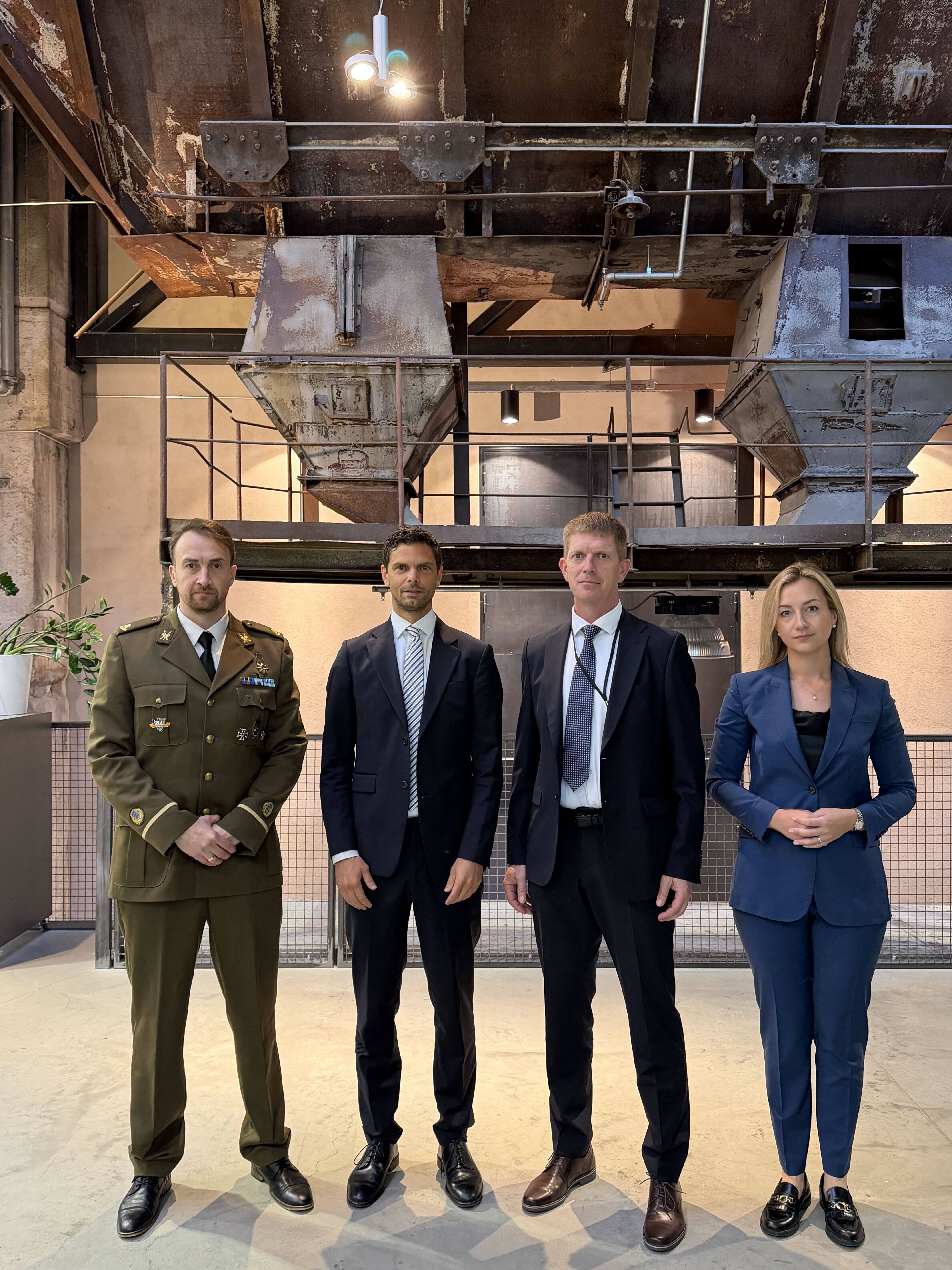
In June, the Finnish Ministry of Defence, the Estonian Defence Forces and NestAI signed a letter of intent on cooperation in defence AI, establishing a framework for joint development, training and technical cooperation with an intent to expand to other Baltic and Nordic countries. The initial focus is adaptive and learning AI, command and control support, and unmanned systems.
What matters about it is the order of events. The participants agreed on open and modular architecture as the basis of the cooperation before procuring the systems the principle will apply to, and the framework is intended to take in further nations and industry partners over time. What it sets out to establish is that national control and allied interoperability can be specified together rather than traded against each other.
What the choice locks in
Architecture is among the hardest decisions to change after procurement. A platform bought on a closed architecture can be maintained, upgraded and kept in service for two decades without the terms on which it connects to anything else ever changing. An open architecture leaves that freedom with the organisation operating the system.
A national choice made this year can shape European defence well into 2040.
Europe will spend the next decade replacing a generation of systems. Whether what it buys is still worth what it cost by the time that decade is over depends less on what each system can do on delivery than on who is able to change it, and on what it is able to work alongside.